Why 0.8mm Cold Rolled Steel is the Standard for High-Quality Smart Lockers
When sourcing smart lockers for a high-tech office in Waterloo or a busy logistics hub in Winnipeg, the conversation often centers on software, biometric sensors, and cloud integration. However, the most sophisticated “brain” is useless without a robust “body.”
In the manufacturing world, 0.8mm Cold Rolled Steel has emerged as the global benchmark for high-quality electronic lockers. But why this specific thickness? Why not thinner for cost-saving, or thicker for maximum strength? The answer lies in the perfect balance of structural integrity, precision, and economic efficiency.
1. The “Goldilocks” Thickness: Strength vs. Weight
In engineering, there is a concept of “over-engineering” versus “under-engineering.”
- Thin Steel (under 0.6mm): While lightweight and cheap, thin sheets tend to “oil-can”—they pop in and out when pressed, creating noise and a feeling of flimsiness. More importantly, they offer little resistance to forced entry.
- Thick Steel (above 1.2mm): While incredibly strong, it adds unnecessary mass. This makes the locker extremely difficult to move, increases shipping costs by up to 40%, and puts immense strain on the floor loading of modern office buildings.
0.8mm Cold Rolled Steel is the “Goldilocks” zone. It provides a rigid, non-flexing surface that feels “solid” to the touch, providing the security required for expensive laptops and personal assets, while remaining practical for logistics.
2. Cold Rolled vs. Hot Rolled: The Surface Finish Advantage
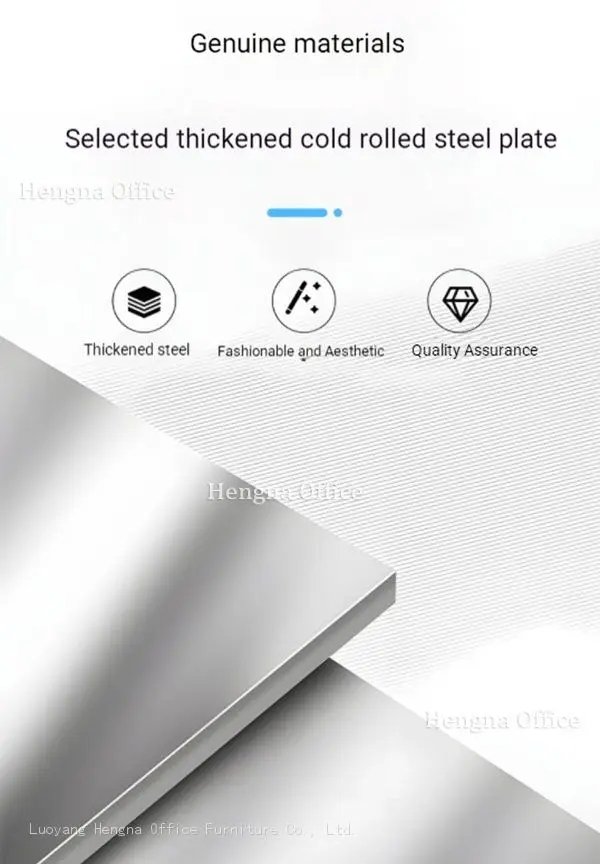
The “Cold Rolled” part of the specification is just as important as the “0.8mm.” Unlike hot rolled steel, which is processed at high temperatures and often has a scaly, rough surface, cold rolled steel is processed at room temperature.
Why Cold Rolled Matters for Smart Lockers:
- Aesthetic Precision: Cold rolling results in a much smoother surface. When we apply Anti-Rust Coating or powder coating, the finish is sleek and professional—critical for a Toronto tech office aesthetic.
- Tighter Tolerances: In a smart locker, the gap between the door and the frame must be minimal to prevent prying. Cold rolled steel allows for a tolerance of ±0.03mm, ensuring every door fits perfectly every time.
- Work Hardening: The cold rolling process naturally hardens the metal, making the 0.8mm sheet significantly stronger than a hot rolled sheet of the same thickness.
3. Comparison: Steel Thickness and Performance Impact
To help procurement managers visualize the difference, let’s look at how thickness affects the lifecycle of an Electronic Storage Cabinet.
| Thickness (mm) | Impact on Security | Bending Resistance | Shipping Cost Impact | Best Use Case |
| 0.5 – 0.6 mm | Low; easy to dent | Poor; prone to warping | Low | Budget Home Furniture |
| 0.8 mm (Standard) | High; impact resistant | Excellent; maintains shape | Moderate (Optimized) | Professional Smart Lockers |
| 1.0 – 1.2 mm | Ultra-High | Rigid | High | Heavy Tool Storage |
| 1.5 mm + | Maximum Security | Extreme | Very High | Bank Safes / External High-Risk |
4. The Hidden Benefit: Precision for Electronic Components
A smart locker is a marriage of hardware and software. Inside the locker, we house Industrial Power Supplies, PCB boards, and infrared sensors.
- Heat Dissipation: 0.8mm steel is thick enough to act as a heat sink for internal electronics but thin enough to allow for efficient CNC punching of ventilation slots without damaging the structural integrity.
- Sensor Alignment: Since 0.8mm steel maintains its shape under the weight of the “Main-Sub” cabinet design, the infrared beams inside the locker stay perfectly aligned. If the steel were too thin and warped over time, the “Infrared Item Detection” would fail, leading to false “Locker Occupied” signals.
5. Long-term Durability: Anti-Rust and Longevity
In Canadian climates—from the humid summers of the East Coast to the dry, salty winters of the Prairies—longevity is a major concern. 0.8mm steel is the ideal substrate for electrostatic powder coating.
The thickness allows the steel to go through the Pickling and Phosphating process (pre-treatment) without losing its structural temper. This ensures the anti-rust layer bonds deeply with the metal, preventing the “rust-creep” that often destroys cheaper, thinner lockers within 2-3 years.
6. Economic Efficiency for Global Sourcing
For a China Manufacturer OEM/ODM, 0.8mm is the “sweet spot” for international shipping.
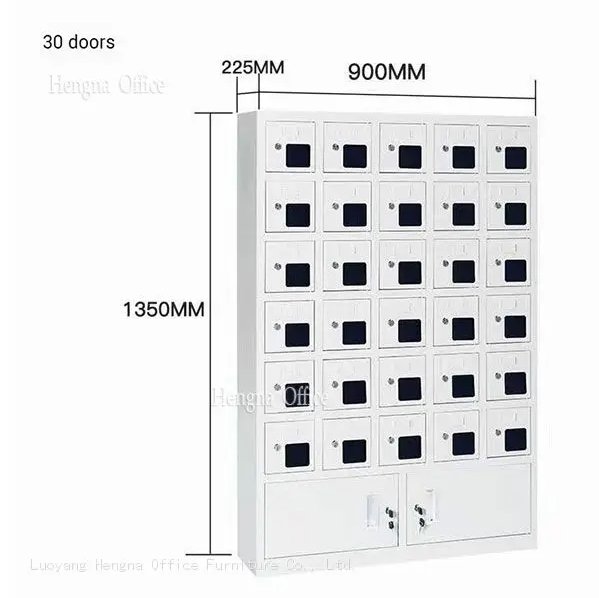
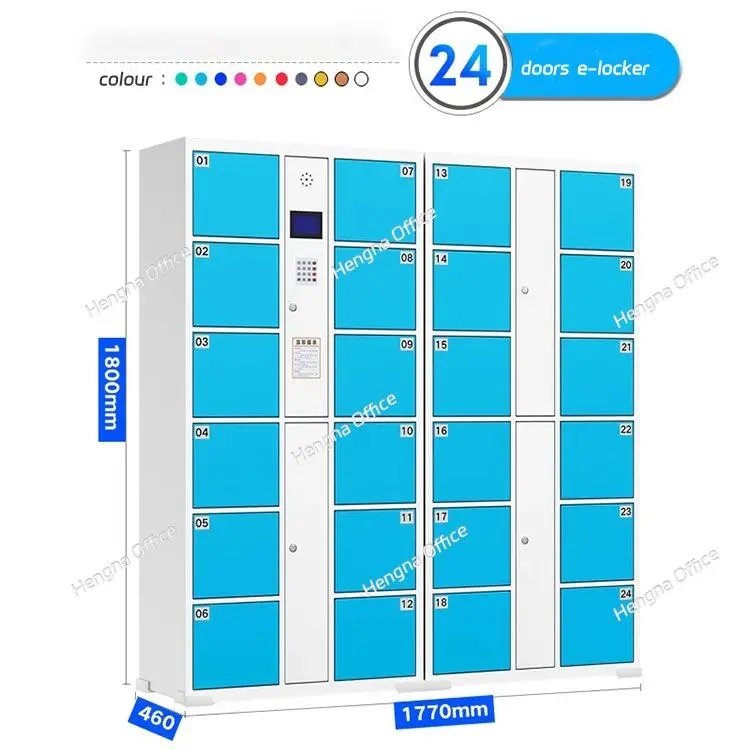
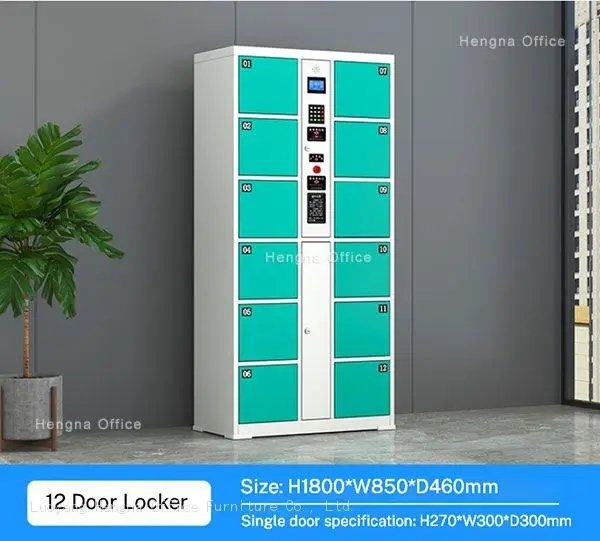
A standard 12-door modular unit made of 0.8mm steel fits perfectly into the weight limits of most shipping containers. This allows us to maximize the number of units per container, directly lowering the “landed cost” for the buyer in Calgary or Edmonton. Choosing 1.0mm might seem like a “stronger” choice, but it often triggers heavy-weight surcharges in the logistics chain without providing a noticeable benefit in daily office use.
Frequently Asked Questions (FAQ)
Q1: Is 0.8mm steel strong enough to prevent forced entry in public spaces?
A: Absolutely. While thinner 0.5mm or 0.6mm steel can be easily dented or “popped,” 0.8mm Cold Rolled Steel offers significant structural rigidity. When combined with our multi-point electronic locking system and precise CNC-machined door gaps, it provides a high level of security that resists prying and impact, making it the ideal standard for tech offices, gyms, and transit hubs.
Q2: Why choose 0.8mm Cold Rolled Steel instead of a thicker 1.2mm option?
A: It’s all about the balance of performance and logistics. While 1.2mm steel is even stronger, it increases the total weight of the locker by nearly 50%. For most indoor applications, 1.2mm is “over-engineered,” leading to significantly higher shipping costs and difficult installation without providing a noticeable benefit in daily security. 0.8mm provides the “Goldilocks” strength needed for smart electronics while keeping the unit agile and cost-effective.
Q3: How does the steel thickness affect the life of the electronic components?
A: Consistency is key. 0.8mm cold rolled steel maintains its shape and flatness over years of use. This structural stability ensures that internal components—like Infrared Sensors and Electronic Locks—stay perfectly aligned. In thinner lockers, the frame can warp slightly over time, causing “door-jamming” or sensor misalignment, which leads to system errors. Our 0.8mm chassis ensures your smart technology functions as precisely on day 3,000 as it did on day 1.
Conclusion: Making the Professional Choice
When you see 0.8mm Cold Rolled Steel on a specification sheet, you aren’t just looking at a measurement. You are looking at an industry-standard designed to provide:
- Security that protects high-value assets.
- Precision that ensures smooth electronic door operation.
- Durability that survives a decade of high-frequency use.
- Value that balances quality with logistics costs.
For 2026, as tech offices and smart cities expand, choosing the right material is the first step in building a reliable automated future. If you are a procurement manager, don’t just ask for a “metal locker”—ask for the 0.8mm Cold Rolled Standard.