Steel vs. Wood: Which Material of Flat File Cabinet Offers Better Longevity for Design Studios?
In the world of architecture and fine art, the “original” is sacred. Whether it is a hand-drafted blueprint for a civic skyscraper or a master-study charcoal drawing, these large-format documents are the physical manifestations of a studio’s intellectual property.
However, a silent battle is often fought in the studio office: How do you store these oversized assets for decades without them—or the furniture holding them—deteriorating?
The debate usually centers on two materials: Steel and Wood. While wood offers a traditional aesthetic, modern design studios are increasingly pivoting toward industrial-grade cold-rolled steel. This guide explores the longevity, structural integrity, and environmental resilience of both materials to help you decide which is a better “vault” for your creative legacy.
The Structural Integrity Factor: Load-Bearing Reality of Material of Flat File Cabinet
A single sheet of A0 vellum or heavy-weight watercolor paper doesn’t weigh much. But 500 sheets? That is a different story.
Wood: The Risk of “Sag”
Wood is a natural, fibrous material. Over time, under the constant pressure of heavy paper stacks, wooden drawer bottoms are prone to deflection (sagging). Once a drawer bottom sags, it creates friction with the drawer below it. For a design studio, this is a nightmare—it can lead to “paper burn” or physical tears when you force a stuck drawer open.
Steel: The Engineering of Rigidity
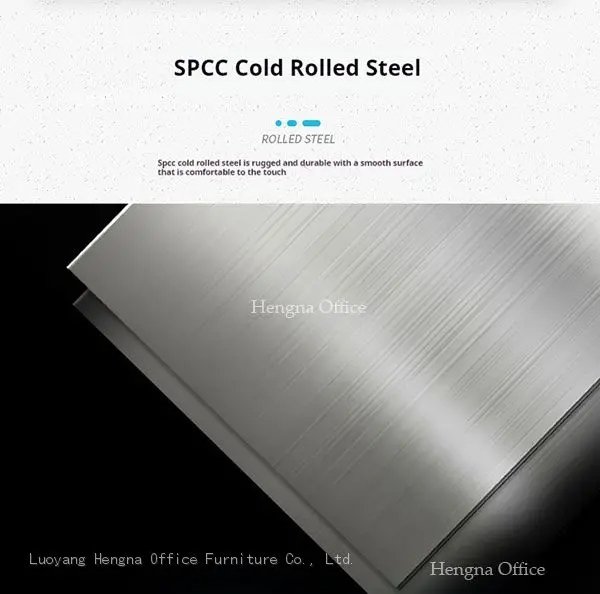
Cold-rolled steel (SPCC) is engineered for uniformity. High-quality steel flat files utilize internal reinforcement beams—cross-members welded under each drawer. Steel does not “creep” or deform over years of heavy loading. For a studio planning to archive documents for 20+ years, steel provides a level of structural predictability that wood simply cannot match.
Environmental Resilience: Humidity and Temperature
Design studios are rarely perfect laboratory environments. From coastal studios in Miami to desert offices in Arizona, ambient conditions fluctuate.
The “Breathing” Problem of Wood
Wood is hygroscopic; it breathes. When humidity rises, wood expands. When it dries, it contracts. In a flat file cabinet, this leads to:
- Sticky Drawers: Expansion causes wooden drawers to jam in their tracks.
- Acid Migration: Many wooden cabinets use adhesives or stains that can off-gas volatile organic compounds (VOCs), which yellow and embrittle paper over time.
The “Shield” of Powder-Coated Steel
Steel is inert. It doesn’t expand in the heat or warp in the humidity. Modern steel cabinets are finished with an electrostatic powder coating. This creates a non-porous “armor” that prevents moisture from reaching the metal (preventing rust) and, more importantly, prevents humidity from seeping into the paper stacks.
Comparison at a Glance: Steel vs. Wood
| Longevity Feature | Cold-Rolled Steel Flat Files | Traditional Wooden Plan Chests |
| Weight Capacity | High (50–132 lbs per drawer) | Moderate (Prone to sagging) |
| Climate Resistance | Immune to humidity-driven warping | Expands/Contracts with weather |
| Drawer Operation | Ball-bearing glides (Consistent) | Friction-based or wooden tracks |
| Archival Safety | Inert (No off-gassing) | Potential acidic stains/glues |
| Maintenance | Minimal (Wipe down) | High (Needs polishing/re-waxing) |
| Modularity | Stackable & Scalable | Usually fixed units |
| Fire Resistance | High (Protective barrier) | Combustible |
The “Silent” Killer of Longevity: Mechanical Wear
A cabinet is only as good as its moving parts. In a design studio, a flat file drawer might be opened ten times a day or once every six months. In both cases, the mechanism must work perfectly.
Wooden cabinets often rely on wood-on-wood slides or simple plastic rollers. Over time, wood dust from friction accumulates in the tracks, making the operation gritty.
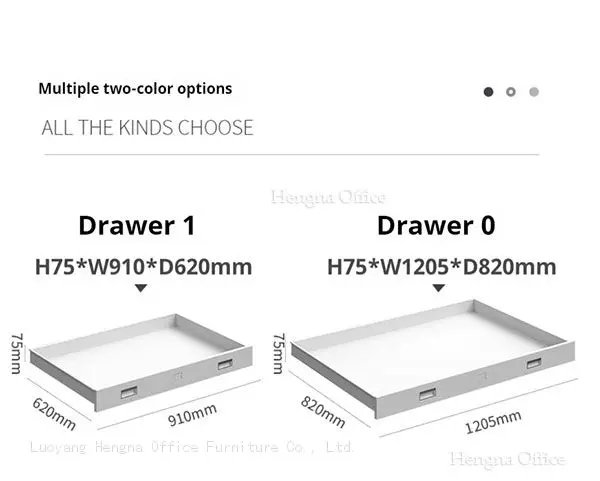
In contrast, professional steel flat files utilize heavy-duty ball-bearing telescopic slides. These systems are designed for thousands of cycles. The use of cold-rolled double tracks ensures that even when the drawer is fully extended—showing you the very back of an A0 sheet—the drawer remains horizontal and stable. This mechanical precision is what defines “longevity” in a working studio.
Modularity and the Lifecycle of a Studio
Studios are not static; they grow. This is where the Modular Stackable Design of steel cabinets becomes a longevity advantage.
Most wooden plan chests are sold as finished, heavy pieces of furniture. If you outgrow your 5-drawer wooden chest, you must buy an entirely new unit that may not match.
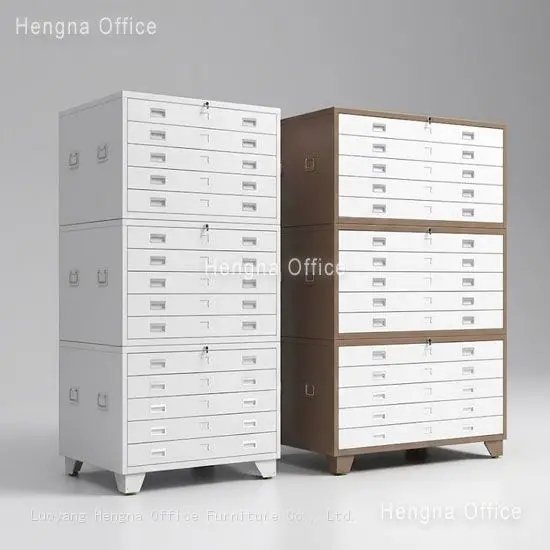
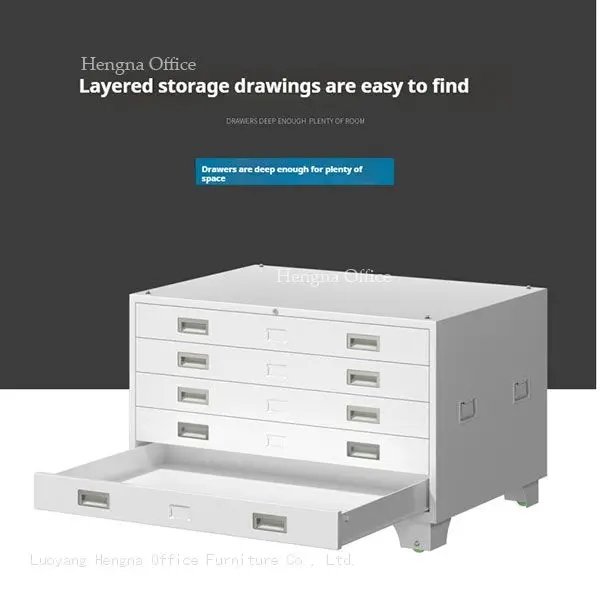
Steel systems are built like Lego for professionals. You can start with a single 5-drawer section on a high-profile base. Five years later, you can buy another 5-drawer section and stack it on top. By utilizing the pre-drilled anti-shift ports, you create a unified, floor-to-ceiling archive. The furniture evolves with your career, rather than becoming obsolete.
The Logistics of Longevity: The KD (Knock-Down) Revolution
A surprising factor in the lifespan of a cabinet is how it arrives at your studio. Traditional wooden cabinets are shipped “built-up.” During the long journey from a factory to a studio in Los Angeles or Chicago, these large, hollow boxes are highly susceptible to “joint racking”—where the vibrations of the truck loosen the glue and screws before you even open the box.
Modern steel cabinets often utilize KD (Knock-Down) Construction. By shipping flat-packed, the components are protected in dense, manageable cartons. Once assembled on-site, the structural fasteners (bolts and cams) provide a tighter, more rigid connection than aged wood glue. Furthermore, if a studio moves to a new location, a KD cabinet can be disassembled, moved safely, and reassembled, whereas a wooden chest often suffers permanent damage during relocation.
Conclusion: Which is the Better Investment?
If your goal is a vintage aesthetic for a home office where drawers are rarely used, wood is a beautiful choice.
However, for professional design studios, engineering firms, and archives, the choice is clear. Cold-rolled steel offers:
- Chemical Neutrality: Protecting paper from acid and yellowing.
- Mechanical Superiority: Smooth access to heavy sets of drawings.
- Climate Defiance: Stability in humid or arid environments.
- Scalability: The ability to stack and grow.
When you invest in a steel flat file, you aren’t just buying office furniture; you are buying a 30-year insurance policy for your most valuable creative assets.
FAQ for Studio Managers
Q: Does steel furniture feel too “industrial” for a creative studio?
A: Modern powder coatings allow for a variety of finishes. A “Matte White” or “Minimalist Grey” steel cabinet often complements a modern studio better than bulky dark wood, providing a clean, professional backdrop for creative work.
Q: Is assembly difficult for KD (Knock-Down) steel cabinets?
A: Not at all. High-quality manufacturers design these with “one-tool assembly” in mind. Most units can be fully commissioned in under 30 minutes, and the resulting structure is often more stable than pre-assembled alternatives.
Q: How do I know if the steel is high-quality?
A: Look for the SPCC (Cold-Rolled Steel) designation and a steel gauge of at least 1.0mm. Also, check for the presence of reinforcement beams under the drawers—this is the hallmark of a cabinet built for longevity.