5 Hidden Benefits of Screwless Assembly Lockers for Large-Scale Projects: A Procurement Game-Changer
When managing a large-scale infrastructure project—whether it’s a sprawling university campus, a multi-story corporate headquarters, or a high-capacity aquatic center—the logistics of furniture procurement are often underestimated. Most procurement officers focus heavily on the unit price, but the real “project killer” is the hidden cost of installation and long-term maintenance
If you are currently evaluating storage solutions for a project requiring hundreds or thousands of units, the term “Screwless Assembly” (also known as the Mortise-and-Tenon or Snap-Fit structure) should be at the top of your priority list. Moving away from traditional metal lockers with thousands of fasteners isn’t just a design choice; it’s a strategic business decision. Here is a deep dive into the five hidden benefits of Screwless Assembly Lockers.
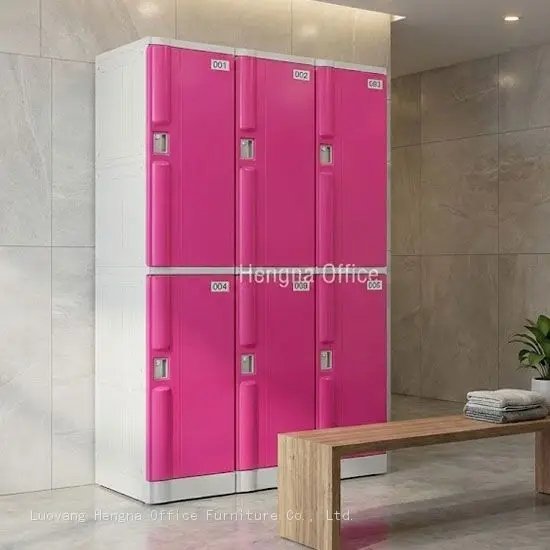
1. Screwless Assembly Lockers: Radical Labor Cost Reduction: The “Lego” Efficiency Factor
In large-scale B2B projects, labor is often the most volatile variable. In regions like North America, Europe, or Australia, hiring a team of skilled contractors for a two-week installation can cost nearly as much as the lockers themselves.
The Traditional Bottleneck:
Traditional steel lockers arrive either pre-assembled (which costs a fortune in “shipping air”) or as a “flat pack” that requires screws, nuts, washers, and power tools. An experienced technician might take 20 to 30 minutes to properly align, screw, and check a single 4-tier locker bank. For 1,000 units, that is 500 man-hours.
The Screwless Breakthrough:
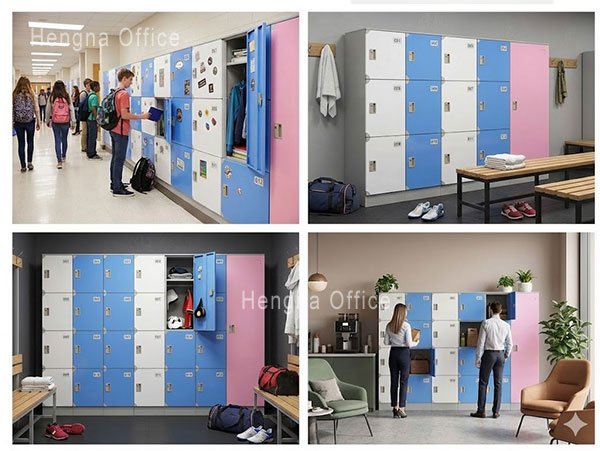
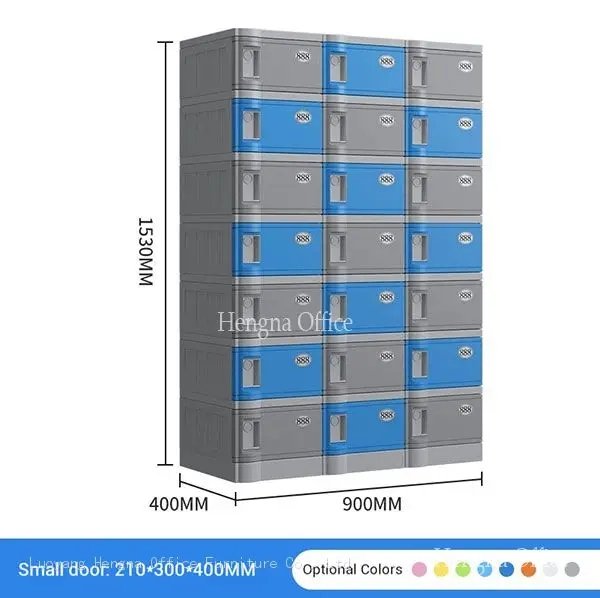
Our ABS modular lockers utilize a precision-engineered interlocking design. It is essentially “Lego for adults.”
- No Tools Required: Panels snap together using a high-strength mortise-and-tenon system.
- Rapid Deployment: An untrained staff member can be taught the process in 5 minutes. The assembly time drops to 3–5 minutes per unit.
- The Math: By cutting assembly time by 80%, a project that previously required a month of labor can now be completed in a single week using general on-site staff.
2. Structural Integrity: Ending the “Vibration Loosening” Cycle
A common complaint in industrial and educational facilities is the “wobbly locker.” This isn’t usually a fault of the material, but a failure of the fasteners.
The Mechanical Failure of Screws:
In a high-traffic hallway, lockers are subject to constant micro-vibrations from slamming doors, heavy footsteps, and environmental shifts. Over time, metal screws naturally lose their “bite.” Once a screw begins to back out, the structural integrity of the entire row is compromised, leading to door misalignment and lock failures.
The Tension-Lock Advantage:
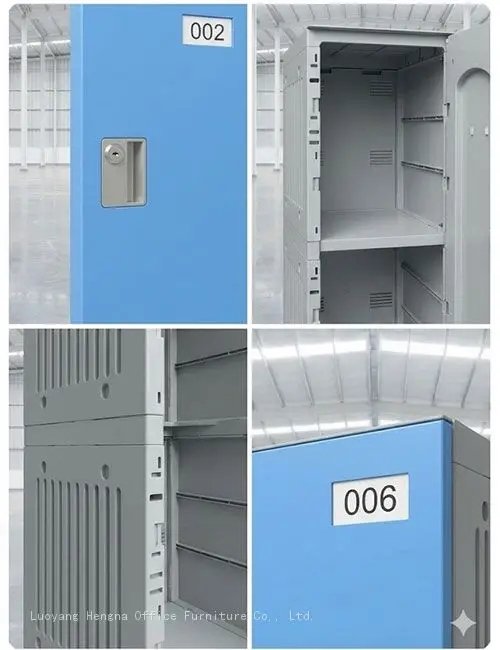
Screwless assembly relies on physical interlocking and surface tension.
- Self-Stabilizing: In a mortise-and-tenon system, the more the locker is used, the more the joints settle into their locked position.
- Zero Loose Parts: There are no tiny washers to fall out or bolts to strip. This is particularly critical in food processing plants or cleanrooms, where a stray screw falling into a production line could cause a catastrophic safety recall.
3. “Flat-Pack” Logistics: Optimizing the Global Supply Chain
For an international B2B buyer, the “Landed Cost” is the only number that matters. Shipping “air” (pre-assembled furniture) across the ocean is a massive waste of capital.
Logistical Comparison Table:
| Metric | Traditional Pre-Assembled Lockers | Screwless Flat-Pack ABS Lockers |
| Container Utilization (40HC) | Approx. 250–300 Units | Approx. 600–800 Units |
| Shipping Cost per Unit | High (paying for empty space) | Low (maximized density) |
| On-site Storage Space | Requires massive staging area | Minimal footprint until assembly |
| Damage Risk | High (protruding parts dent easily) | Low (flat panels are easier to protect) |
The Hidden Benefit: Because screwless units are perfectly flat until they are snapped together, the risk of “shipping damage” (dents and bent corners) is reduced by nearly 90%. This eliminates the project delays caused by waiting for replacement parts.
4. Agile Infrastructure: The Ability to Reconfigure and Relocate
The modern workplace and school are no longer static. Departments move, student populations fluctuate, and facility layouts are redesigned every few years.
The “Disposable” Nature of Metal Lockers:
Once a metal locker is bolted together and perhaps even bolted to a wall, moving it is a nightmare. Disassembling metal units often strips the threads, making them impossible to rebuild with the same level of sturdiness.
Modular Freedom:
ABS screwless lockers are inherently modular and reversible.
- Scalability: Need to turn 100 lockers into two groups of 50 in different buildings? No problem.
- Reversibility: You can disassemble the units, move them in a standard elevator (no heavy lifting equipment needed), and reassemble them without any loss of structural strength.
- Phased Upgrades: If a facility wants to upgrade its lock system from a padlock hasp to a digital lock in five years, the modular door panels can be swapped out individually without replacing the entire cabinet body.
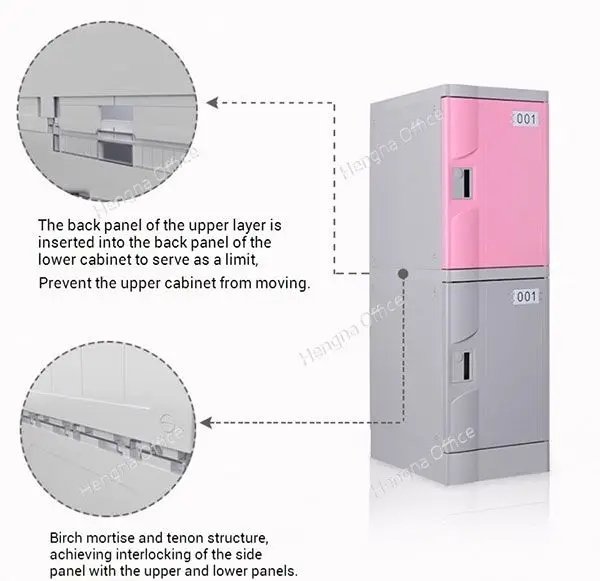
5. Enhanced Safety, Hygiene, and Professional Aesthetics
In large-scale public projects, the “Finish” is what defines the architect’s success.
Safety First:
Fasteners are a safety liability. Exposed screw heads can catch on expensive athletic wear or cause minor scratches. In a school setting, students often “tamper” with exposed screws. A screwless design is tamper-proof from the outside.
The Hygiene Factor:
In hospitals and laboratories, every crevice is a potential home for pathogens.
- Seamless Interiors: Screwless joints are tighter and more seamless than bolted joints.
- Washdown Ready: Because there are no metal fasteners, there is zero risk of rust bleeding out from the joint after a high-pressure wash. This makes it the only viable solution for “Cleanroom” and “Hygienic” specifications.
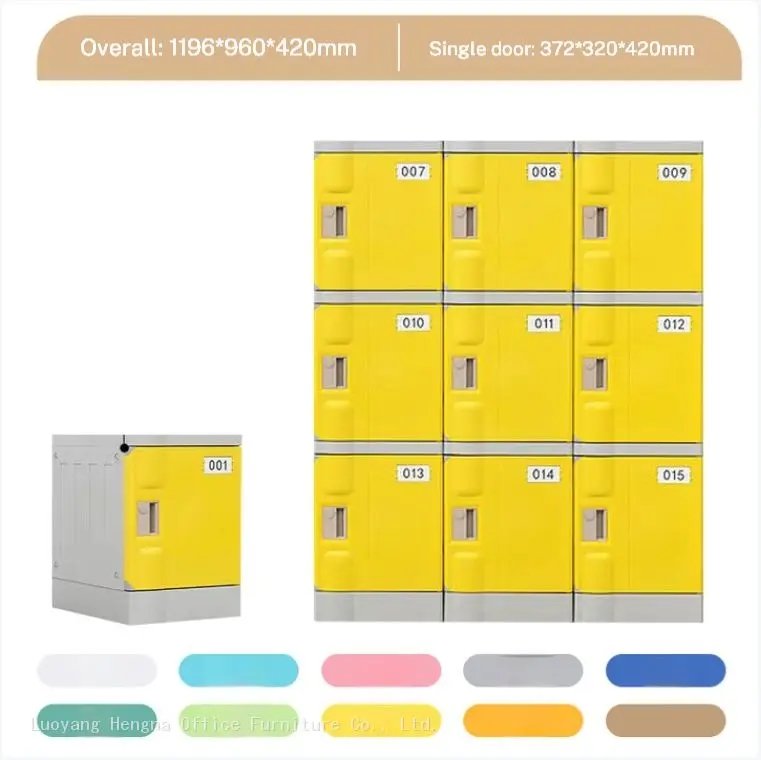
Case Study: The 1,000-Locker Sports Complex
Consider a municipal sports center project.
- Scenario A (Steel): 1,000 units. 4 containers. 3 weeks of assembly by 4 contractors. Total “Hidden Cost” (Freight + Labor): $25,000+.
- Scenario B (ABS Screwless): 1,000 units. 2 containers. 4 days of assembly by existing facility staff. Total “Hidden Cost”: $8,000.
The $17,000 difference isn’t just a saving; it’s a budget that can be redirected to better amenities or higher-quality lock systems.
Conclusion: Why Smart Procurement is Moving Toward Screwless
For the modern facility manager or procurement director, the goal is to minimize Total Cost of Ownership (TCO). While a traditional locker might look cheaper on a per-unit quote, the “Hidden Costs” of screws—labor, shipping, loosening, and rust—quickly erode those savings.
By choosing Screwless ABS Modular Lockers, you are investing in a system that is faster to install, cheaper to ship, safer for users, and virtually maintenance-free. It is the smartest way to ensure your large-scale project stays on time, under budget, and built for the future.