Heavy Duty Tool Cabinet for Machine Shop: Steel or Plastic — Which One Holds Up Better
If you run a machine shop, you know the drill. End mills scattered across workbenches. Calipers gone missing again. Monthly tool counts that never match. At some point, someone says “we need proper heavy duty tool cabinets for the machine shop.” Then the question hits: steel or plastic? It’s been asked a thousand times on forums. But once you’re standing on a shop floor with cutting fluid in the air, the answer gets a lot less abstract. Here’s what we’ve seen across a dozen machine shops over the years.
Heavy Duty Tool Cabinet for Machine Shop——Steel vs Plastic in a Machine Shop: Where the Differences Actually Show Up
Forget the spec sheets for a minute. Here’s how these two materials actually behave when you put them next to a CNC lathe, not in a catalog photo.
| What happens | Steel Heavy Duty Tool Cabinet | Plastic Storage Cabinet |
|---|---|---|
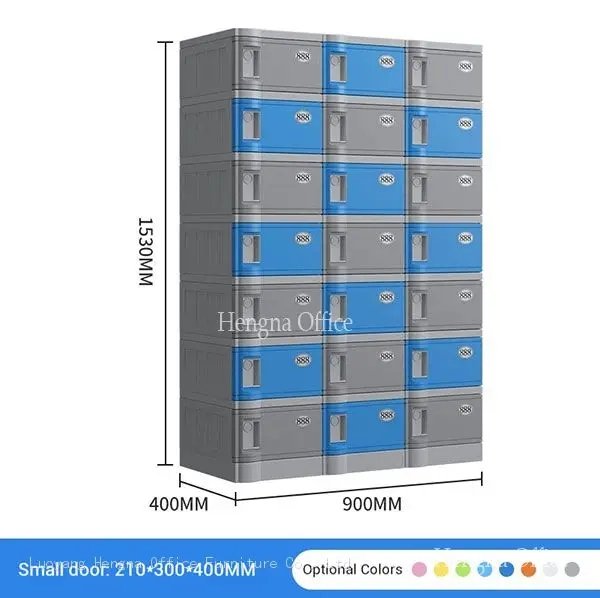
| Cutting fluid gets on it | Wipe it off, zero staining | Surface turns dull and sticky, won’t clean up |
| Metal chips land on it | Blow it off with an air gun | Leaves permanent scratch marks |
| Sparks fly nearby | Metal doesn’t fuel a fire | Melts and catches |
| Moving it around | Heavy, needs casters — but stays put | Light, easy to shove — but also easy to tip |
| After 3 years | Looks the same | Replaced at least once already |
| Designed to last | 15 years | 3 to 5 in a real shop environment |
Why Plastic Cabinets Fall Apart Around Cutting Fluid and Metal Chips
A machine shop isn’t a dry warehouse. There’s mist in the air, oil on every surface, and fine metal particles landing on everything by the end of a shift.
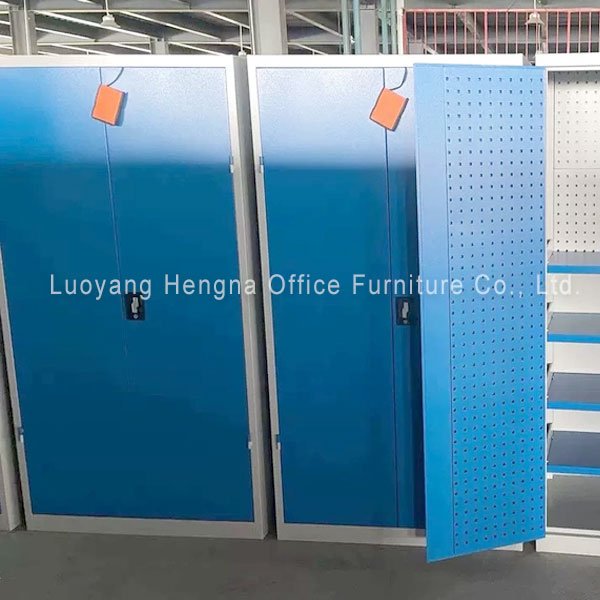
Plastic cabinets look fine on day one. But cutting fluid doesn’t evaporate clean — it leaves residue. On plastic, that residue sinks in. Give it a few months and the surface turns hazy, then sticky. You can scrub it with degreaser, and it still won’t look clean. That’s not a cleaning problem. That’s the material breaking down.
Metal chips are worse. They land sharp-side-down, and on plastic that means a permanent gouge. Ten thousand chips later, the cabinet looks like it’s been through a war. A steel cabinet with rust-resistant finishing handles the same environment without drama. Wipe. Blow. Done.
Then there’s fire safety. Machine shops have sparks — from grinding, from a bad insert cut, from welding somewhere nearby. Steel doesn’t burn. Plastic does. It’s that simple.
None of this means plastic cabinets are useless. They work for dry storage areas, spare parts rooms, places without chips and coolant. But parked next to a machining center? Wrong tool for the job.
What Actually Works: A 3-Drawer Steel Cabinet Sized for Real Shop Floors
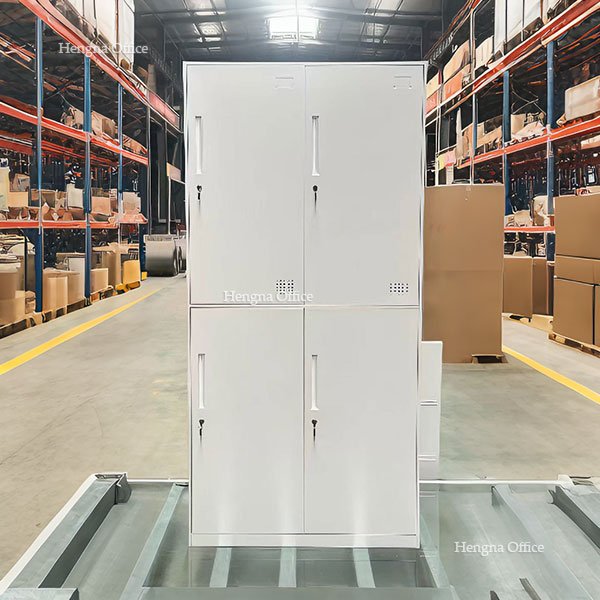
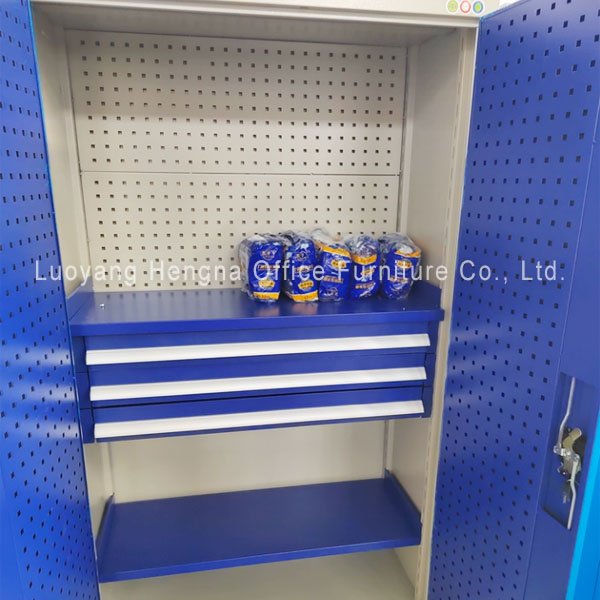
The configuration that keeps coming up in machine shops is a 3-drawer layout in a cabinet measuring 1800×1000×500mm. That footprint sits cleanly against a standard pallet dimension, so it doesn’t waste floor space along the shop wall.
The drawer mix matters. A shallow top drawer for calipers, micrometers, and small carbide inserts. A medium-depth middle drawer for drill bits, taps, and reamers. One deep bottom drawer for large wrenches and machine accessories. Three drawers with that mix covers the daily tool load for most machining stations.
On finish: this isn’t regular paint. It’s a rust-resistant treatment designed for workshop conditions — not the same thing as a decorative coating. Cutting fluid wipes off without etching. No need to baby it.
Other details worth knowing before you buy: lockable drawers with separate keys so you can assign custody of expensive measuring tools. Fixed feet for cabinets that stay at one workstation, swivel casters if the cabinet moves between cells. And the design life on these is 15 years — not a marketing number, just the engineering baseline. In practice, a machine shop that does basic wipe-downs at shift change gets well past that.
How a Precision Parts Factory in Henan Fixed Their Tool Loss Problem
Back in 2021, a precision shaft sleeve manufacturer in Henan province was losing tools at a rate that showed up on the monthly P&L. Plastic storage bins in the machining section were getting replaced every five to six months — cutting fluid and chips were eating through them that fast. Monthly tool audits came back 8 to 12 percent short. And every 5S inspection was a fail on the tool storage line item.
They swapped the machining-section storage over to 1800×1000×500mm steel tool cabinets with 3-drawer layouts and lockable drawers for the inspection-grade measuring tools.
Six months later: tool loss dropped below 2 percent per audit. The cabinets were still clean after shift-end wipe-downs. 5S passed on the first attempt, no deductions on tool storage. Those same cabinets are still in place now — going on four years with no replacement cycle.
The real return here isn’t the cabinet itself. It’s the math you don’t see on the purchase order: the cost of lost tools plus replacement bins every half year versus buying once. When you look at five-year total cost instead of unit price, the steel cabinet wins by a margin that makes plastic look expensive.
Three Things to Nail Down Before You Order
Do these three checks before you send a PO. They’ll save you from buying the wrong configuration.
One: where is the cabinet going? If it’s within arm’s reach of a machine tool — next to a CNC lathe or mill — don’t even consider plastic. Cutting fluid mist travels further than you think. The cabinet three meters from the machine still gets hit.
Two: do you need locks? If you’re storing micrometers, dial indicators, or any inspection-grade tools, yes. Lockable drawers with individual keys mean you can hold a person accountable for the tools assigned to them. For general drill bits and wrenches at open stations, non-locking is fine.
Three: fixed feet or casters? Cabinets at a dedicated workstation should be on fixed leveling feet — stable, doesn’t walk. If you’re running a maintenance bay or tool crib where the cabinet moves between cells, get swivel casters with brakes. Don’t try to split the difference and get something “in between” — it’ll end up annoying you on both fronts.
Get these three answers, then send us your shop layout. We’ll match the configuration so nothing shows up wrong.
Questions Machine Shop Buyers Keep Asking
Can I use plastic cabinets in a machine shop at all?
For short-term use storing non-cutting items — spare belts, gloves, consumables — yes. For anything near the machining zone or holding tools you can’t afford to lose, no. The replacement math doesn’t work out: plastic every three to five years versus steel once.
Will a steel cabinet rust in a humid shop?
Regular painted steel will, eventually — especially in coastal shops with salt in the air. A rust-resistant treated cabinet, wiped down at shift change, won’t show rust issues for years. If your shop floor floods regularly, that’s a different problem entirely, and no cabinet solves that.
Is 3 drawers enough for a full machining station?
For most turning and milling setups — yes. The shallow-medium-deep drawer mix handles calipers, inserts, drills, taps, and wrenches in one unit. Shops with 50-plus machinists usually go with one cabinet per station rather than trying to cram everything into one unit.
Can the dimensions be customized?
Yes. 1800×1000×500mm is a common shop-floor size, but we handle OEM and ODM orders — drawer heights, layout, color, and lock type are all adjustable. Send us your floor plan and we’ll spec it.
How is it packed for international shipping?
Each cabinet ships with moisture-resistant film wrap and four corner protectors. Standard sea freight, doesn’t need a crate, never had a damage claim on this packaging setup. CE certified across the full product line.
Bottom Line
If you’re staring at a machine shop floor covered in tools and wondering whether to go steel or plastic, start with the three questions above. Steel costs more upfront — nobody denies that. What most shops miss is the replacement cycle and the tool loss that comes with plastic. Run the five-year total cost, not the unit price.
We’re a manufacturer-direct supplier — no middlemen, no trading desk. OEM and ODM orders are standard for us, not an upsell. Send us your dimensions and requirements, and you’ll get a quote back within 24 hours.