Industrial Safety: Implementing a Secure Staff Phone Locker Policy in Your Factory
In the high-stakes environment of a manufacturing plant, a split-second distraction can lead to disaster. According to recent industrial safety studies, mobile phone usage on the factory floor is becoming one of the leading causes of workplace accidents, ranked closely behind fatigue and equipment malfunction.
For Operations Managers and Safety Officers, the challenge is clear: How do you enforce a “no-phone” policy without lowering employee morale?
The answer lies in offering a fair trade-off. By implementing a secure, centralized Industrial Mobile Phone Charging Locker, you protect your facility from accidents and intellectual property theft while offering employees a valuable perk: a safe place to fully charge their devices during their shift.
In this guide, we explore why industrial phone lockers are now mandatory equipment for modern factories and what features you must look for.
The Hidden Risks of Mobile Phones in Manufacturing
Before discussing the solution, we must understand the three core risks of allowing smartphones on the production line:
- Safety Distractions: A notification ping can cause a forklift driver or a CNC operator to look away at a critical moment.
- Intellectual Property (IP) Theft: With high-resolution cameras in every pocket, protecting prototypes and proprietary production processes is harder than ever.
- Signal Interference: In precision electronics factories, unauthorized wireless signals can sometimes interfere with sensitive testing equipment.
Implementing a “Deposit at the Door” policy is the only 100% effective control measure. However, asking employees to pile their expensive phones into a cardboard box or an open shelf invites theft and damage liability.
Why Standard Lockers Fail vs. Industrial Charging Cabinets
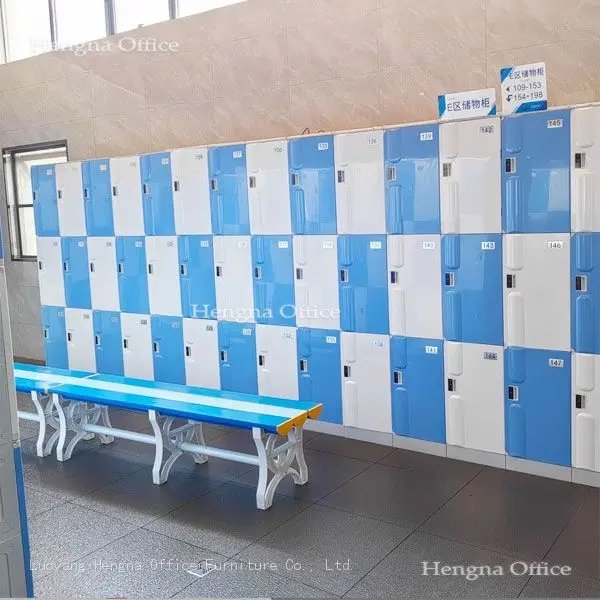
Not all lockers are created equal. We have seen factories try to use wooden cubbies or standard gym lockers, only to face electrical fires or break-ins.
Luoyang Hengna Office Furniture has engineered a solution specifically for the industrial sector. Here is why specialized equipment is necessary:
1. Electrical Safety is Non-Negotiable
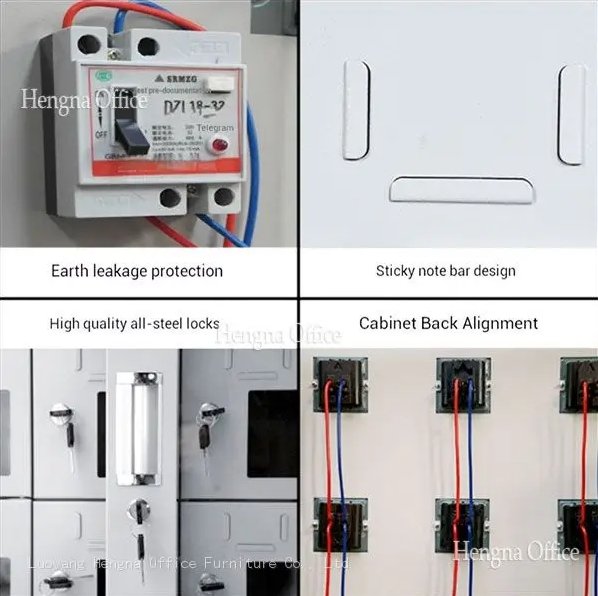
In a factory, electrical safety is paramount. You cannot have 50 cheap chargers plugged into a daisy-chain of extension cords—that is a fire hazard waiting to happen. Our industrial cabinets feature a built-in Earth Leakage Protection system. As seen in our technical components, the cabinet includes a certified circuit breaker. This device automatically cuts off power in the event of a short circuit or overload, ensuring that a faulty phone battery doesn’t burn down your locker room.
2. Organized “Back-of-House” Wiring
Messy wires are not just ugly; they are dangerous. Our cabinets utilize a professional Cabinet Back Alignment design.
- The Result: All wiring is concealed and insulated.
- The Benefit: The user compartment is clean and free of exposed live wires, ensuring total safety for your staff when they plug in.
3. Heavy-Duty Security
Trust is earned. If employees are handing over their $1,000 smartphones, they need to know they are safe.
- Steel Construction: Made from high-quality cold-rolled steel, resistant to impact and prying.
- Individual Locking: Each bay is secured with high-quality all-steel locks that feature a low mutual opening rate. This is far superior to cheap plastic cam locks found on budget models.
Choosing the Right Configuration for Your Workforce
Different zones in your factory may require different locker styles. Hengna offers “multiple options available to support customization” to fit your specific workflow.
Option A: The “Privacy” Model (Self-Contained, Closed)
Best For: Production Lines, R&D Centers.
- Features: Solid steel doors that completely hide the contents.
- Why choose it? It offers maximum privacy. Out of sight, out of mind. It also prevents potential thieves from “window shopping” to see which locker holds the newest iPhone model.
Option B: The “Visibility” Model (See-Through Window)
Best For: Break Rooms, Security Checkpoints.
- Features: Stand-alone transparent acrylic windows.
- Why choose it? This allows security guards to visually inspect the contents without opening the door (ensuring no contraband is stored). It also helps employees remember to retrieve their phones at the end of a shift because they can see the device.
Step-by-Step Guide: Implementing Your New Policy
Buying the cabinet is step one. Here is how to roll out the policy successfully:
Step 1: Assign Lockers Use the “Sticky note bar design” located above each door lock. Assign a specific numbered slot to each employee for their shift duration. This creates accountability.
Step 2: Key Management Issue the unique key to the employee. As the administrator, keep the master key in a secure location. This ensures you can access any locker in an emergency or if an employee loses their key (or is terminated).
Step 3: Define “Phone-Free Zones” Clearly mark areas (e.g., the CNC machining floor, chemical mixing area) where phones are prohibited. Place the Hengna Charging Station at the entrance to these zones, acting as a “Checkpoint.”
Step 4: Promote the Benefit Don’t market this as a restriction. Market it as a benefit: “Free Fast Charging while you work.” Employees are more likely to comply if they get a fully charged battery at the end of the day.
An industrial phone locker is not an expense; it is an investment in safety compliance and production efficiency. By removing distractions and providing a secure, electrically safe environment for personal devices, you create a focused and happier workforce.
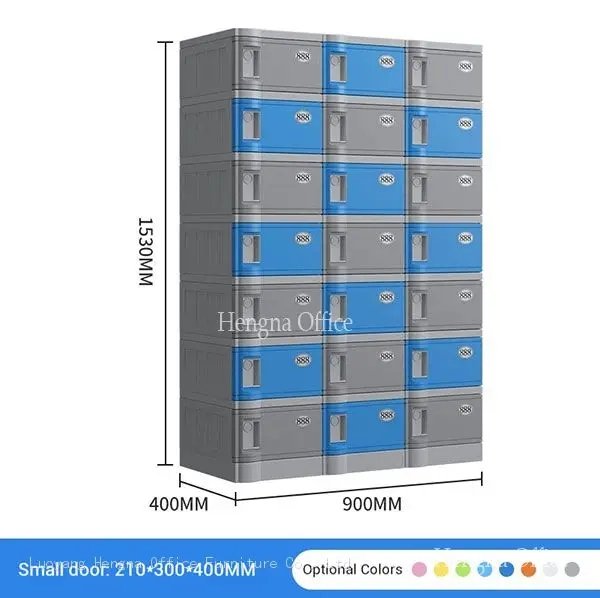
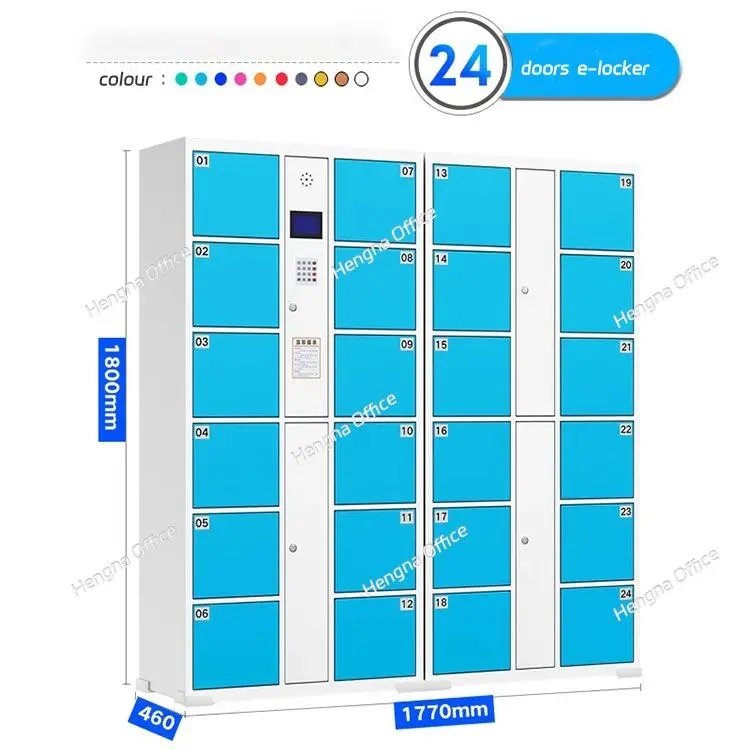
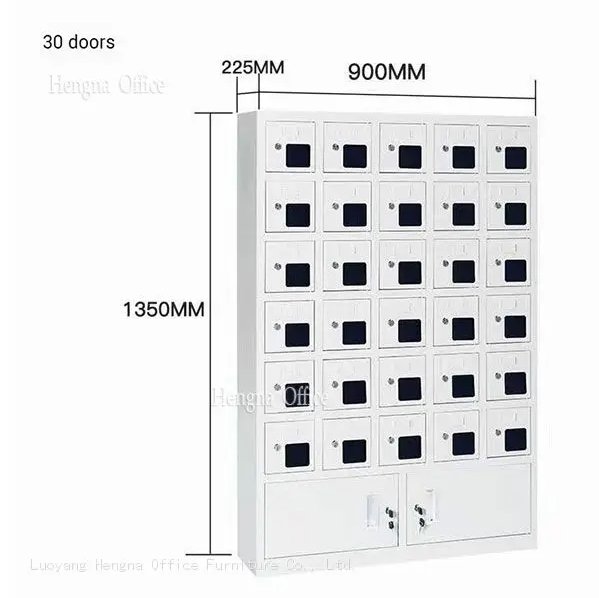
Luoyang Hengna Office Furniture is your partner in industrial storage solutions. From compact 9-door units to massive 30-door charging stations, we have the factory-direct capacity to outfit your entire plant.
Ready to upgrade your factory’s safety? Contact our export team today for a quote on our Earth-Leakage Protected Charging Lockers. We support OEM customization for colors, logos, and plug types.