Electronic Locker System for Malls — 12/24/48 Door Barcode Storage, Plug-and-Play Setup
A shopper walks into your mall carrying a backpack, a coffee, and a shopping bag. They want to try on clothes, but the backpack goes with them everywhere — bumping into racks, taking up a changing room bench, weighing them down. A staffed cloakroom costs you two salaries and limited hours. An electronic locker system for malls solves this with one touch: print a barcode, scan it, grab a compartment.
This guide covers how barcode storage lockers work, how to size a 12/24/48-door system for your foot traffic, and why plug-and-play delivery cuts your installation timeline from weeks to a single morning.
How a Barcode Locker Actually Works
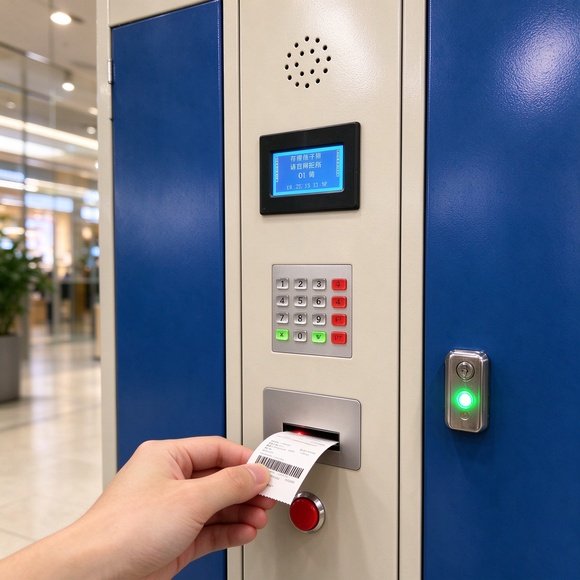
The mechanics are simpler than they look. A shopper walks up to the main cabinet, presses the touch key pad, and a built-in thermal printer spits out a small paper ticket. The ticket carries three things: a barcode, a PIN number, and the compartment number. The assigned door unlocks with a click.
When they return, they hold the ticket under the infrared scanner. The control board matches the barcode to the compartment and pops the door. The ticket is single-use — once the door opens, that slot frees up for the next person. No coins, no keys to lose, no staff managing a sign-in sheet.
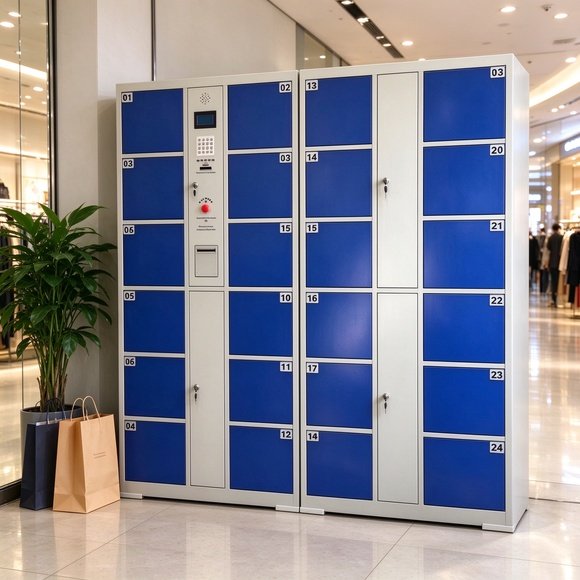
Inside each cabinet you get an LCD screen with step-by-step prompts, acrylic crystal keys that don’t wear smooth, a voice speaker that walks first-time users through the process, and the scanner window on the main unit. Sub-cabinets connect to the main unit — they don’t need their own printer or screen.
Sizing: 12, 24, or 48 Doors for Your Foot Traffic
The right number of compartments depends on how many people need storage at peak hour. A small community supermarket might start with 12 doors. A regional mall with 20+ tenants usually needs 24 doors minimum. A transit-adjacent shopping center or theme park should look at 36 or 48, with room to add sub-cabinets later.
| Configuration | Height | Width | Depth | Best For |
|---|---|---|---|---|
| 12-door main unit | 1800 mm | 850 mm | 460 mm | Small shops, test install, pilot programs |
| 24-door double unit | 1800 mm | 1700 mm | 460 mm | Mid-size malls, supermarkets, fitness clubs |
| 36-door triple unit | 1800 mm | 2550 mm | 460 mm | Large shopping centers, transit hubs |
| 48-door+ | Custom | Custom | 460 mm | Megamalls, theme parks, airport terminals |
Each compartment is roughly 270 mm tall by 300–460 mm wide — enough for a backpack, a handbag, a jacket, or a small shopping bag. Oversize luggage needs a designated large-cell cabinet, which is available as a custom mix.
Main Cabinet + Sub-Cabinet: Expand Without Rebuying
The biggest mistake buyers make is ordering a fixed 24-door unit and then needing 36 doors six months later. A modular system lets you start with one main cabinet (the one with the printer, screen, and scanner) and add sub-cabinets beside it as traffic grows. Each sub-cabinet plugs into the main unit and shares the same control board.
This means you don’t have to guess the final door count on day one. Start with what your current traffic justifies, add wings next quarter when the new anchor tenant opens. The cabinet colors, door numbering, and finish stay consistent across additions.
Plug-and-Play: Why Delivery Day Is Morning, Not Week Two
Most commercial lockers ship in flat panels and need a technician on site for a day — assembling the frame, wiring the electronics, testing every door. That’s downtime and an extra contractor invoice.
These cabinets arrive pre-assembled and pre-tested at the factory. You wheel them into position, plug into a standard wall outlet (110V or 220V, confirmed in the quotation), and they’re live. No mounting to the wall required — they stand free on leveling feet. The biggest installation challenge is rolling them through the service corridor without scratching the floor.
Barcode vs. Staffed Cloakroom: The Math
A staffed cloakroom needs at least one attendant per shift, often two to cover breaks. Over a year, that’s two salaries, training, turnover, and a fixed operating window. Customers arrive after closing and find nowhere to put their bags.
An electronic locker system runs 14–16 hours a day on its own. A single facility manager handles issues in passing — a jammed ticket, a forgotten receipt, an emergency door release. The payback period on a 24-door unit is typically measured in months, not years, once you factor in saved labor and improved shopper experience.
What Happens When Power Cuts or Tickets Jam
Two failure modes come up in every buyer interview. First, power loss. The cabinet has a mechanical override key for the facility manager — each door can be opened manually during an outage. An optional backup battery module keeps the control board alive for short interruptions.
Second, a customer loses their ticket. The manager scans a master QR code on the admin panel, pulls up the compartment log, and releases the door. No guessing, no unlocking the wrong unit. Every door event logs with a timestamp, which matters if a customer claims something was stolen.
Customization: Color, Language, and Branding
The cabinet body ships in standard blue, orange, teal, white, or gray, but powder coat colors are custom. Match your mall’s wayfinding palette or your anchor tenant’s brand color. The LCD screen text, voice prompts, and printed ticket format can be localized to your market language — English, Arabic, Spanish, Russian, whatever your visitors read.
Logo silk-screening on the header panel is included in OEM/ODM orders. Voltage, plug type, and CE certification are confirmed in the quotation. Large-format models ship in KD panels to reduce freight damage; small units arrive fully built.
Who Buys This and Why
Shopping center operators. You need storage near the food court and the main atrium. A 24-door unit in each high-traffic zone cuts shopper fatigue and lengthens dwell time.
Supermarket chains. Customers refuse to leave bags unattended at the checkout. A 12–24 door unit near the entrance solves it without dedicating a staff member.
Theme parks and water parks. Wet swim gear and dry lockers don’t mix. Modular units near changing rooms handle peak summer loads, and the steel body handles humid indoor-park air better than plastic.
Transit hubs and university libraries. Commuters and students need short-term, unattended storage. The barcode ticket is disposable — no accounts, no cards to issue.
Quick Answers
Q: What’s the minimum order?
A: One main unit ships. Ocean freight economics improve at five units or more, confirmed in the quotation.
Q: Can I mix lock types in one system?
A: Yes. A main cabinet with barcode printing can drive sub-cabinets that use IC card swipe or PIN code. One control system, mixed access methods.
Q: How long does delivery take?
A: Standard units ship in 7–15 days. Custom colors, languages, or mixed lock configurations take 15–25 days, confirmed in the quotation.
Q: What warranty is included?
A: One year on the full cabinet. The main control board and electronic locks are covered for replacement within that period.
Q: Does it work outdoors?
A: The cabinet is rated for indoor and covered semi-outdoor use. Direct rain or coastal salt air needs a weather-sealed variant, discussed in the quotation.
Get Your Quote
Tell us your daily peak traffic, the door count you’re leaning toward, and your target voltage. We’ll send a spec sheet and FOB or CIF pricing within 24 hours. Multi-unit mall projects and chain rollouts get volume pricing confirmed in the quotation.