Food Safety Audits and Employee Lockers: What Inspectors Actually Check
When a food facility starts prepping for an audit, most of the energy goes to the production line. Cleaning schedules, temperature logs, staff training — nobody cuts corners on the big stuff.
But there’s one spot that often gets overlooked: the employee locker area.
Not every inspector will kneel down to examine your lockers. But if they do, and they find rust on metal cabinets, mold on wood, or peeling paint collecting in the corners — that’s a mark against you. Some auditors will flag it for corrective action. Then you’re scrambling to replace units on a deadline, burning budget and staff hours you didn’t plan for.
This article isn’t a guide on how to pass an audit. And I’m not going to quote BRC or SQF clause numbers at you. I’m just going to answer one practical question: if you run facilities or procurement at a food plant, what locker material will actually save you headaches?

Why Lockers Even Show Up on Audit Checklists
BRC, SQF, FSSC 22000, IFS — all of them have requirements for employee facilities. Lockers aren’t classified as food contact surfaces, but they fall under personnel hygiene infrastructure.
The core concern for auditors is simple: could this locker become a source of contamination?
Rust flakes, paint chips, mold spores — they might seem contained to the changing room. But employees walk through corridors and into production areas. On shoes. On cuffs. On hands. In a facility where hygiene tolerance is basically zero, that transfer is a risk.
And food plant environments are brutal on storage. Steam. High humidity. Daily chemical disinfection. Not every cabinet material is built to survive that.
5 Things Auditors Look For in Locker Areas
We’ve supplied lockers to food facilities domestically and overseas for over a decade. When auditors ask about lockers, the questions almost always fall into these five buckets. The comparison below isn’t theoretical — it’s what we’ve validated across actual food plant projects.
1. Is the surface smooth and non-porous?
Rough or cracked surfaces harbor bacteria. An inspector runs a hand across the finish or catches it in the light — any pitting or micro-cracks, and they take note.
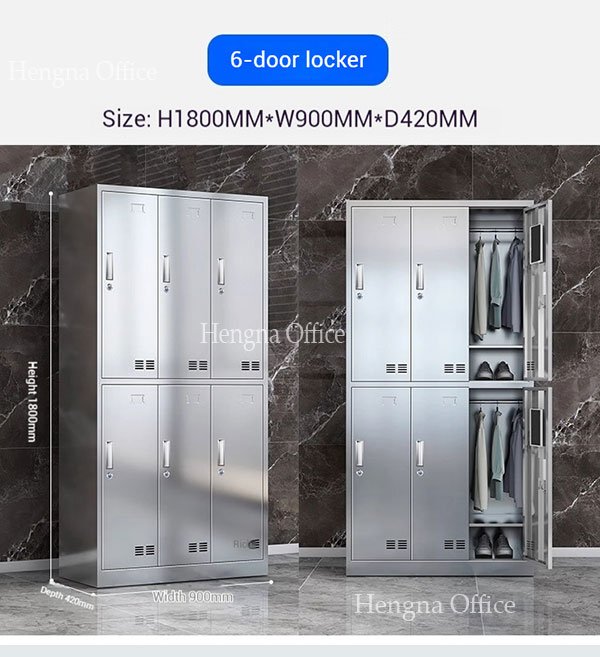
Painted metal cabinets: after a few years the paint surface develops fine cracking. Bacteria live in those cracks.
Wooden cabinets: natural grain pores absorb moisture. In humid environments the wood swells and the gaps widen.
ABS plastic cabinets: injection-molded in one piece. Smooth surface, no seams, nowhere for bacteria to hide.
2. Can it handle disinfectant?
Daily wipedowns with chlorine-based sanitizers and alcohol are standard in food plant changing rooms. Auditors look for corrosion or degradation from chemical exposure.
Metal cabinets: welds and edges are the first to go. Discoloration. Blistering. Then rust.
ABS plastic: resistant to most common cleaning chemicals. Wipes down clean with no surface change.

3. Is there rust or corrosion?
High heat and high humidity are normal in food processing. Metal cabinets usually start showing rust within three to five years. Rust particles can track into production on footwear and clothing.
Auditors spot rust at the base or door edges, and it goes in the report.
ABS plastic doesn’t rust. That’s a material property, not a coating.
4. Is paint peeling or flaking?
Painted metal cabinets shed chips after a few thermal cycles and chemical exposures. Those chips on the floor are physical contamination hazards. Inspectors don’t miss this.
ABS plastic is molded in color. No paint layer. Nothing to peel.
5. Is it easy to clean?
Cabinet bases, door gaps, and corners are inspector hot zones. Complex structures with dead angles are hard to sanitize properly. If the cleaning crew can’t reach it, the auditor will see that.
ABS cabinets are structurally simple. Flat surfaces. Tight corners. A damp cloth does the job.
Metal vs Wood vs ABS Employee Lockers — What Actually Works in Food Facilities
Here’s the side-by-side:
| Audit Check | Painted Metal | Wood | ABS Plastic |
|---|---|---|---|
| Smooth, non-porous | ⚠️ Paint cracks over time | ❌ Natural grain pores | ✅ One-piece molded surface |
| Disinfectant resistant | ⚠️ Weld points corrode | ❌ Swells and warps | ✅ Chemical resistant |
| No rust / corrosion | ❌ Rusts in humidity | ⚠️ Mold prone | ✅ No rust, no rot |
| No paint flaking | ❌ Paint peels and chips | ❌ Sheds wood fibers | ✅ No paint layer |
| Easy to clean | ⚠️ Dead angles | ❌ Texture traps grime | ✅ Wipes clean |
| Typical lifespan in food plants | 3–5 years | 2–3 years | 10–15 years |
The pattern is clear. Metal and wood both have fatal weaknesses in a food processing environment. ABS plastic is one of the few materials that clears all five checks.
Common Locker Failures in Food Processing — Real Scenarios
No made-up client stories. These are industry-common situations:
Scenario 1: High-humidity environments
Meat processing, seafood, beverage plants — humidity in changing rooms mirrors the production floor. Metal bases rust first. Wood swells and molds. ABS holds steady for ten years in the same conditions.
Scenario 2: Frequent disinfection
Daily chemical wipe-downs are non-negotiable. Metal welds and door edges are the first casualties. ABS surfaces tolerate repeated exposure without degradation.
Scenario 3: Temperature swings
Transition rooms between cold storage and ambient production see rapid temperature shifts. Metal surfaces condensate, accelerating corrosion. ABS doesn’t condensate and isn’t affected by thermal cycling.

A Practical Checklist for Food Facility Buyers
If you’re specifying or replacing lockers, run through this:
✅ Material: ABS or HDPE plastic
✅ Surface: smooth, non-porous, one-piece construction
✅ Humid environment: choose louvered doors for ventilation and mold prevention
✅ Structure: simple, no dead angles at base or corners
✅ Color: light tones so dirt is visible immediately
✅ Lock: recessed or integrated preferred over external hardware
❌ Avoid painted metal cabinets
❌ Avoid wooden cabinets
❌ Avoid textured plastic that traps residue

Do Employee Lockers Need Food-Grade Certification?
Worth clearing up a common misconception: employee lockers are not food contact surfaces. They do not require FDA food-grade certification.
But the material should be non-toxic. Reputable ABS suppliers can provide SGS material test reports confirming no heavy metals or hazardous substances.
The real selection criterion is “will this become a contamination source,” not “does it carry a food-grade stamp.” If your customer or auditor asks for material documentation, any legitimate manufacturer can provide it.
Choosing employee lockers for a food facility isn’t complicated — it mostly comes down to material. If your current units are showing rust, chipped paint, or mold, that’s your signal to upgrade before the next audit.
Not sure if your setup will pass? Send us a photo and we’ll share our thoughts — no sales pitch, just honest feedback.