12 Doors, 4 Tiers, Zero Rust: A Factory Worker Locker That Actually Survives
Factory floors are hard on equipment.Machinery takes hits from hammers and forklifts. Workwear gets soaked in oil and coolant. Storage lockers aren’t exempt — workers stash their helmets, boots, phones, and lunches in there. When the locker rusts through or the door falls off, it’s not just an inconvenience. It’s downtime, replacement cost, and a headache for the maintenance team.
I’ve talked to plenty of plant managers who started with steel lockers. Cheap, easy to source, everywhere. But give it two or three years in a real production environment, and the problems show up.
Why Metal Lockers Don’t Last on the Factory Floor
Steel lockers hold up fine in dry offices. But factories are different.
High humidity — especially near wash stations or coolant lines, the air never really dries out. Temperature swings — hot summers, cold winters, condensation forms on metal surfaces every cycle. Add airborne oil mist and metal dust settling into seams and welds, and you’ve got a corrosion recipe.
You’ve seen it: bottom edges of doors rusted through, locks so stiff they need pliers to turn, hinges crumbling into orange flakes. Some plants have had doors fall off completely. Get flagged in a safety audit, and now you’re dealing with corrective action on top of replacement cost.
12 Doors, 4 Tiers Factory Worker Locker — What That Actually Gets You
Before diving into materials, let’s talk layout.
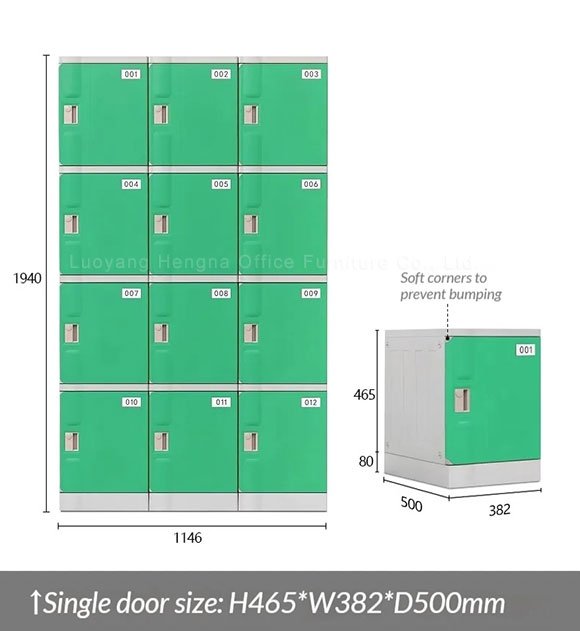
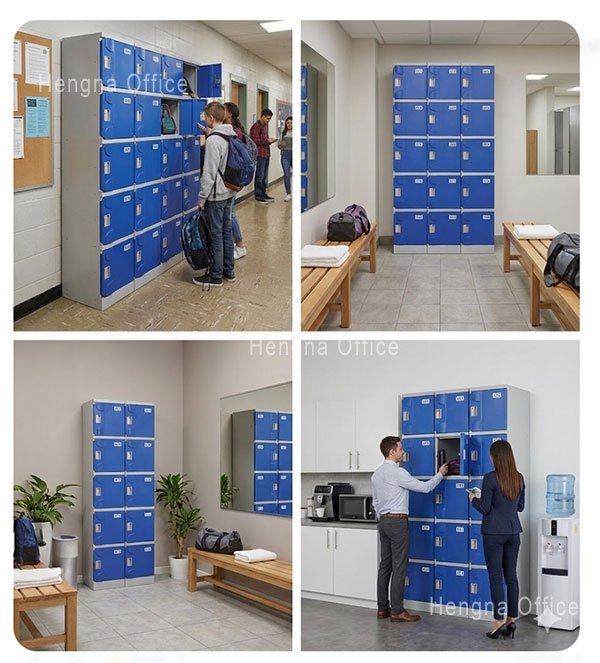
A 12-door unit in a 4-tier configuration gives every worker their own compartment. Hard hat, coveralls, tools, phone, lunch box — it all fits. No cramming, no mixing, no “someone took my spot” complaints.
Compared to single-door cabinets, the 12-door setup is more practical. One compartment having issues doesn’t affect eleven others. Worker satisfaction goes up. And when you spread the purchase cost across twelve users instead of buying separate units, the math works out better.
How Long ABS Plastic Lockers Actually Last in a Factory
Here’s the real question.
ABS is an engineering thermoplastic. No metal content means water vapor, oil mist, and coolant spray don’t touch its structural integrity. You can literally hose it down without worrying about rust.
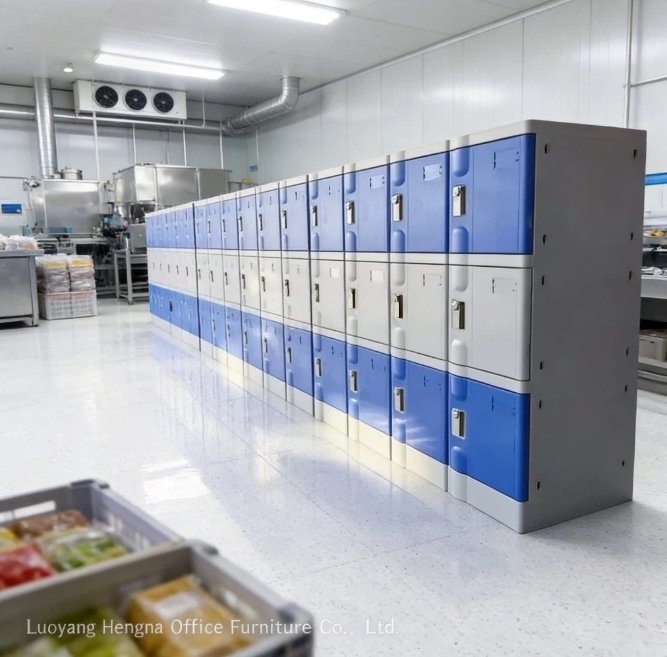
One food processing plant we supplied went through a hygiene audit with zero issues — first time in three years their locker area wasn’t flagged. An electronics factory told us workers stopped complaining about the musty smell that used to come from their old metal lockers. A machine shop has had ours installed for three years without touching a single screw.
Nothing lasts forever. But in the same factory environment where steel starts showing corrosion in year three, ABS units are still going strong at year ten. That gap compounds fast when you’re managing a facility budget.
Installation and Maintenance — Actually Simple
ABS lockers ship knock-down. Modular, flat-packed panels.
Two people, about thirty minutes, and a bank of twelve is standing. No welding, no cutting, no waiting for a contractor to fit you into their schedule. Your own maintenance crew can handle it. Need to expand or rearrange later? Same process.
Maintenance is basically zero. Steel needs hinge checks, lubrication, rust removal, repainting. ABS gets wiped with a damp cloth. Smooth surface, nowhere for grime to hide, no odor absorption.
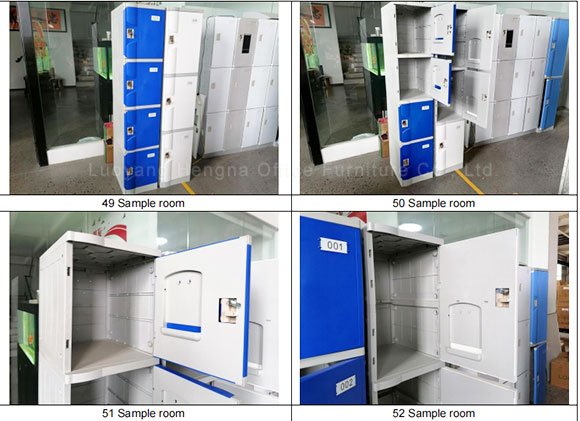
Workers notice when their storage is clean. It’s one of those small things that quietly improves morale.
What to Check Before You Spec
Not all ABS lockers are built the same. A few details to verify:
- Material grade: Must be ABS, not PP or PE. ABS is harder and more impact-resistant — what you need in a factory setting.
- Lock hardware: Independent locks per door, but check the latch strength. Workers open and close these dozens of times a day. Cheap hardware fails in months.
- Modularity: Can you add units later? Reconfigure the layout? Choose a system that grows with your floor plan instead of locking you in.
- Base design: Factory floors get wet. A unit with a raised gray base keeps the cabinet body out of standing water. That one detail extends service life significantly.
Bottom Line
Factory storage sounds like a small thing until it’s your problem.
Workers need somewhere they can trust. Dry. Clean. Not smelling like the last shift’s greasy coveralls. Give them that, and it’s not extra budget — it’s fewer headaches.
Dry, low-corrosion factory floor? Steel works fine. But if you’ve got humidity, oil mist, coolant spray, or hygiene requirements on your floor, ABS is the choice that lets you sleep at night.
12 doors. 4 tiers. Zero rust. Easy to install. Easy to live with.
This time, it’s the right spec.