How Classroom Storage Color Affects Student Mood and Behavior — A Look at Locker Color Psychology
Walk into these two classrooms and tell me if they feel different.
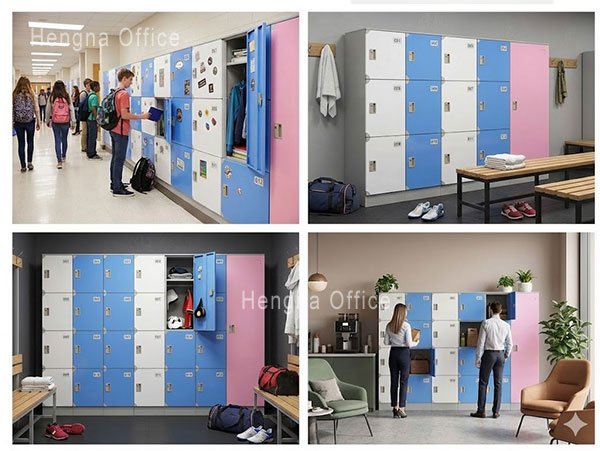
Room A: Warm orange walls. A blue-painted window frame. A green carpet in the reading corner. And a row of lockers — pink, yellow, white, blue, green — running along the back wall. The room has a temperature. It feels alive.
Room B: Gray walls. Gray-blue metal lockers. White fluorescent lights. Clean floor. It feels like a classroom. Nothing wrong with it. But nothing memorable either.
The difference between these two rooms isn’t the furniture budget. It’s the color strategy.
Here’s a look at why — and how classroom storage color affects the students who use it every day.
Color Affects How Students Behave — It’s Not Pseudoscience
Research in environmental psychology has been studying this for decades. The findings are consistent enough to draw clear conclusions:
- Warm colors (red, orange, yellow) stimulate the nervous system. They increase energy and alertness — but also restlessness. Great for active zones like a play corner or hallway. Use them across an entire classroom, and teachers notice students getting fidgety within a few weeks.
- Cool colors (blue, green, purple) slow the heart rate. They support focus and calm. Ideal for reading areas, study corners, and quiet zones. But a room that’s all cool tones — too cold, too flat. Students seem subdued rather than settled.
- Neutral colors (white, gray, beige) serve as background. They don’t actively influence mood — but they also don’t create landmarks. In a fully neutral classroom, most students can’t describe the color of their own locker area a week into the term.
School lockers occupy a large visual footprint in any classroom — an entire wall of color that students face for 6+ hours a day. The color isn’t decoration. It’s part of the learning environment.
How to Use Storage Color Strategically in a Classroom
“Colorful” doesn’t mean random. Throwing five bright colors at a wall without a plan creates visual noise. Applying them with intention creates a system.
Strategy 1: Color-coding by function
Reading corners get soft green or wood-tone locker doors — calm colors for calm activities. Art and craft zones get yellow or orange doors — active colors for hands-on work. The entry area stays white or light gray — a visual buffer zone that says “this is where you drop your bag, not where you hang out.”
Strategy 2: Gender zoning without labels
One of the hardest parts of classroom management for elementary teachers: assigning lockers.
Zone A in pink and white = girls’ section. Zone B in blue and green = boys’ section. Students don’t read numbers to find their locker. They glance at the wall. “Pink side, third from the door.” A first-grader who can’t read yet doesn’t panic — the teacher said “pink row,” and pink is easy to spot.
Strategy 3: Classroom identity through color
Use one base color per classroom (blue, for example), then vary the shades across individual locker doors. Students immediately feel “these are our lockers.” The classroom next door has green ones. The sense of ownership starts with something as simple as a color range.
Why Metal Lockers Can’t Do Color
Metal lockers don’t come in colors — they come in paint finishes. The factory offers four choices: light gray, medium gray, dark gray, and gray-blue. Pick one.
Want a different color? Possible — but it’s post-production spray painting. More expensive, longer lead time. And within a year, the edges start chipping. The raw silver metal shows through. What was supposed to be “custom color” turns into a patchwork of scraped paint and exposed steel.
Color on a metal locker isn’t part of the material. It’s a layer on top. A student’s key scratches it — gone. A mop handle bumps it — chipped. After one year, the row of “colorful” metal lockers looks ragged.
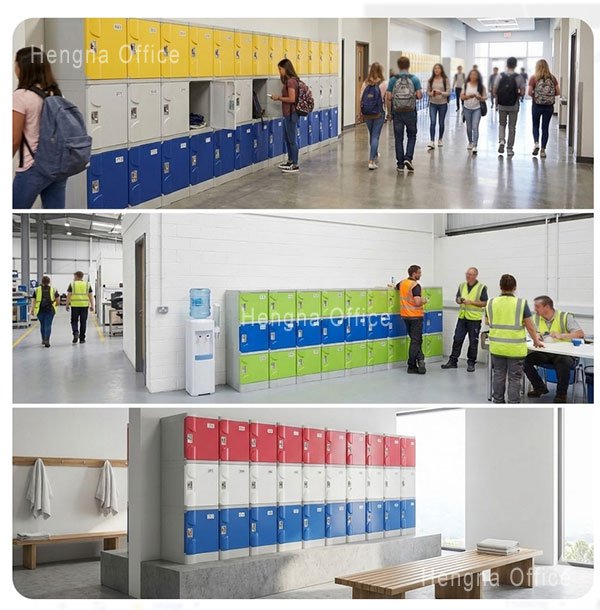
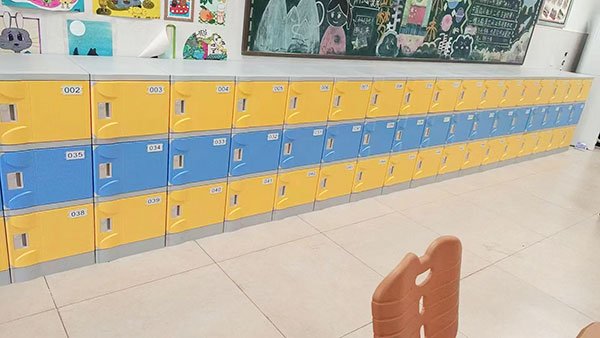
ABS plastic lockers are a different story. The color is mixed into the raw material before molding. It runs through the entire thickness of the door. Scratch it — still the same color. Dent it — no gray underlayer shows. The color a designer picks in year one is the same color in year three.
Won’t Bright Colors Distract Students?
This is the question every school buyer asks: “If the lockers are too colorful, won’t students be less focused?”
It depends on how you use them.
Bad use: Eighteen doors in eighteen different colors. The wall looks like a candy display. The eyes don’t know where to rest. Yes, this is distracting.
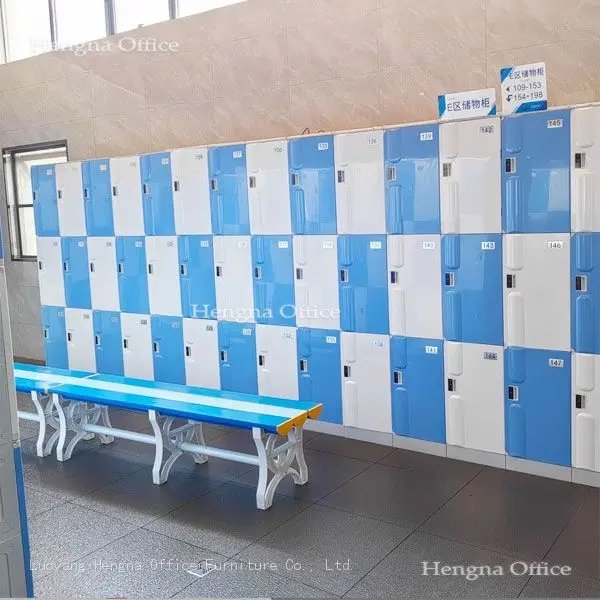
Good use: Color-blocking in repeating patterns. Six pink doors, six white doors, alternating in a clear rhythm. The student’s eye registers a pattern, not chaos. Within days, they know “the white row is mine” without having to check a number.
A well-executed multi-color scheme isn’t “loud.” It’s structured color variation. Same principle as dressing well: ten colors at once is a mess. Two colors alternating is a style.
Real Examples from School Projects We’ve Done
We’ve worked with enough schools over the years to see what works and what doesn’t.
For a kindergarten in Bangkok, we did pink and white alternating doors. The principal told us the kids found their lockers faster on day one than the previous class had after a full week with numbered tags. No teacher escort needed by the third day.
For an international school in Shanghai, they asked for blue and gray — calm tones for their upper-grade classrooms. Teachers reported the hallway felt noticeably quieter than the previous metal lockers. Placebo effect? Maybe. But it was consistent across four floors of classrooms.
For an art school in Kuala Lumpur, they wanted yellow, green, and white mixed randomly. The art teacher said students walked in differently — more engaged, more willing to start working. A subjective observation, but when multiple teachers say the same thing, it’s hard to dismiss.
No double-blind studies here. But the feedback from school administrators is directionally clear: color matters, and getting it right produces better results than a neutral wall of gray lockers.
Classroom Storage Color Reference: Color Combinations for Different Classroom Types
| Classroom Type | Recommended Colors | Why It Works |
|---|---|---|
| Lower elementary (K–2) | Pink + white / Blue + white | Two-color alternation helps pre-readers find their zone by color block |
| Upper elementary (3–6) | Blue + gray / Green + white | Cool tones support focus and calm during longer lesson blocks |
| Art / workshop room | Yellow + green + white | Warm tones activate creativity; white prevents overstimulation |
| Hallway storage zone | Single uniform color | Large color blocks don’t compete with hallway visual clutter |
| Library / reading room | Soft green or wood-tone | Natural tones are easy on the eyes during extended reading |
Color Is Just the Start
Getting the color right matters. But what matters almost as much is whether the color stays right.
ABS locker doors can be swapped independently. If a classroom wants to change its color scheme next year — brand refresh, new grade level, new teacher preference — you replace the door panels, not the whole cabinet. Each door clips off and on in under 30 seconds.
New semester, new color. No construction. No painting crew. No waiting for paint to dry.
Three Things to Remember About Locker Color
1. Children notice color more than adults do. Adults filter out their environment. Children absorb it. The color of their locker is the first thing they see when they arrive at their seat. It matters more than the color of the coffee machine in a corporate break room.
2. The effect fades less than you’d think with painted walls. A freshly painted orange wall boosts energy for about two weeks. Then students habituate. But a locker is an interactive object — opened and closed repeatedly, touched, looked at directly, multiple times per day. The frequency of interaction keeps the color effect from fading as quickly.
3. There are no bad colors — only badly chosen ones. A classroom of seven-year-olds with dark gray locker doors isn’t a design choice. It’s a missed opportunity to shape the environment they spend their day in.
Need Help Choosing Locker Colors for Your School?
Tell us the student age group, classroom function (general classroom, art room, library, hallway), and any brand colors you’d like to match. We’ll send a color recommendation and FOB pricing within 24 hours.